 10/100BASE-T SFP
LC UPC to LC UPC Duplex Switchable Uniboot OM3 Fiber Patch Cable
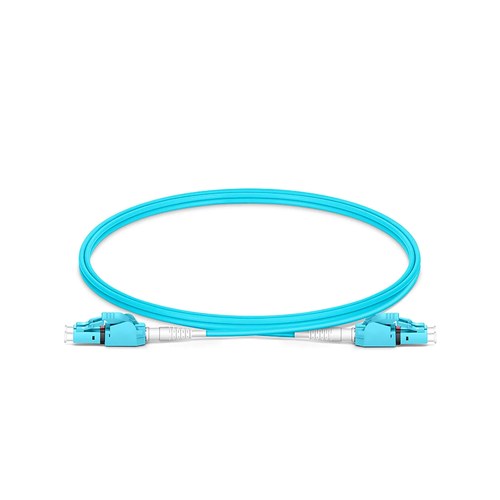
New Zealand engineering teams can use the documented values below to compare the product with the intended channel and as-built requirements. This OM3 fiber patch cable carries a LC UPC interface on one end and a LC UPC interface on the other, factory terminated on OM3 glass and optically tested as a full item. The uniboot design places the two fibers of the duplex optical path inside a single round 2.0mm cord with one combined connector housing, halving the relevant cable count in high-density panels and simplifying polarity management.
Product Highlights
- Uniboot Allows One Cable to Carry Two Fibers to Reduce Cable Congestion in High-Density Patch Fields
- Bend Insensitive Fiber with 7.5mm Min. Bend Radius
- Allow for Easy Reverse Polarity Without Special Tools
- Termination Is Tested to Ensure Network Performance
- Designed for High-Density Fiber Cabling in Network Cabinet Connections, Ceiling Wiring and Under-Floor Wiring in a Data Center
Specifications
| Fiber Count | 2 Fibers |
|---|---|
| Fiber Grade | Bend Insensitive Fiber |
| Fiber Mode | OM3 50/125μm |
| Wavelength | 850/1300nm |
| Flame Rating | Riser (OFNR) |
| Cable Outside Diameter (OD) | 2.0mm |
| Polarity | A (Tx) to B (Rx) |
| Tensile Strength | 60/100N (Long/Short Term) |
| Min. Bend Radius (Optical Fiber) | 7.5mm |
| Min. Bend Radius (Fiber Cable) | 20/10D (Dynamic/Static) |
| Insertion Loss | ≤0.2dB |
| Return Loss | ≥30dB |
| Attenuation at 850nm | ≤3.5dB/km |
| Attenuation at 1300nm | ≤1.5dB/km |
| Operating Temperature | -10 to 70°C (14 to 158℉) |
| Storage Temperature | -20 to 70℃ (-4 to 158℉) |
| Fiber Grade | Bend Insensitive Fiber |
| Flame Rating | Riser (OFNR) |
| Insertion Loss | ≤0.2dB |
| Min. Bend Radius (Fiber Cable) | 20/10 |
OM3 for existing multimode plants
This OM3 item matches the fitted base of OM3 optical path cabling: 10G links to 300 meters and 40/100G SR4 links to 70 meters. When the permanent optical path is OM3, patching with OM3 keeps the optical path specification homogeneous and the test reports clean.
Keeping multimode links healthy
Multimode links fail more typically from contamination than from fiber damage. Each ferrule should be inspected and cleaned before final connection, and the dust caps ought to stay on until the moment of joint. These habits matter more than any specification on the datasheet.
One cord, two fibers
The uniboot design merges the duplex pair into a single round cord and a single connector housing. In a 400G row where each QSFP-DD port consumes a duplex optical path, halving the cord count visibly changes the airflow and the manageability of the patching field.
Length Options
Regular length versions cover the common patching routes: 1m (3ft), 2m (7ft), 3m (10ft), 5m (16ft), with made-to-order length offered beyond the list. Specifying the measured channel length keeps the slack out of the manager and the strain off the connection interfaces.
Quality Control and Testing
Each optical assembly is terminated with precision zirconia ferrule connectors and optically tested before packing: insertion loss and return loss are verified on every cable, and end-face geometry is inspected for consistent physical contact. The relevant cable ships with dust caps on the two connectors and the test result offered on specify.
Ordering and Factory Support
Refer to this design by connector pair, fiber mode and length when requisitioning a quotation. For configurations outside the listed options, mixed connector families, jackets, identification or project packing, send the requirement with the enquiry and the factory will cross-check the build before production is released. New Zealand project orders can include documentation and labeling requirements alongside the technical configuration.
