 10/100BASE-T SFP
Juniper Networks OFL-400G-QDD8xPPC Compatible 400G OSFP 8 x 50G PAM4 RHS/Flat Top to 400G QSFP-DD 8 x 50G PAM4 Passive Copper Twinax Cable
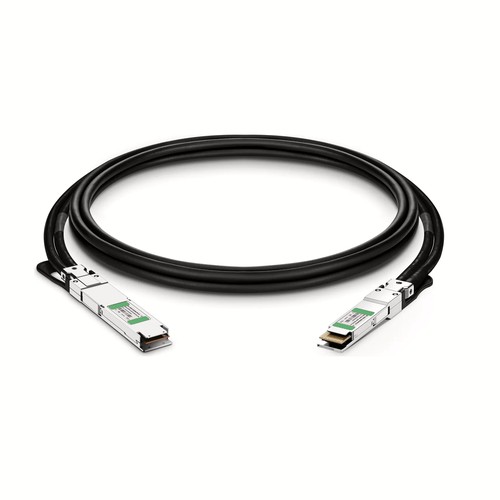
A 400G direct-attached link depends on the correct host identity, interface mode and physical length. This page covers the Juniper Networks OFL-400G-QDD8xPPC compatible DAC series in OSFP (RHS/Flat Top) to QSFP-DD, including 3m (10ft). Each documented length-specific OEM reference is linked separately where an individual product page is available.
Series Part Number: OFL-400G-QDD8xPPCHT Part Number: OFL-400G-QDD8xPPC
Product Highlights
- HT-manufactured compatible alternative for Juniper Networks OFL-400G-QDD8xPPC
- 400G aggregate connectivity at 400Gbps
- Interface configuration: OSFP (RHS/Flat Top) to QSFP-DD
- Passive DAC / Copper
- Length configurations covered: 3m (10ft)
- Conductor specification: 28AWG
- Power consumption: 0.1W (OSFP End) 0.1W (QSFP-DD End)
- Operating temperature: 0 to 70°C (32 to 158°F)
Available Lengths and Corresponding Part Numbers
The documented series configuration is 3m (10ft). Use the relevant OEM reference below together with the HT identity and required length when requesting a quotation. If another length carries a different OEM part number, it must be reviewed and ordered as that distinct configuration.
Compatible OEM Part Numbers
- OFL-400G-QDD8xPPC03
Specifications
| HT Part Number | OFL-400G-QDD8xPPC |
|---|---|
| Manufacturer | HT |
| Form Factor | OSFP (RHS/Flat Top) to QSFP-DD |
| Max. Data Rate | 400Gbps |
| Media | Copper |
| Cable Type | Passive DAC |
| Minimum Bend Radius | 40.5mm |
| Wire AWG | 28AWG |
| Cable Length Options Covered | 3m (10ft) |
| Jacket Material | PVC |
| Max. Power Consumption | 0.1W (OSFP End) 0.1W (QSFP-DD End) |
| Modulation Format | OSFP-8x 50G-PAM4QSFP-DD-8x 50G-PAM4 |
| DDM/DOM | Not Supported |
| Commercial Temperature Range | 0 to 70°C (32 to 158°F) |
| Protocols | IEEE 802.3bs, OSFP MSA, QSFP-DD MSA, CMIS 4.0 |
Applications and Deployment
Passive twinax cables are commonly selected for short switch-to-switch, switch-to-server and accelerator connections within or between nearby racks. With no separate optical conversion stage, they offer a simple low-power physical link. The assembly must nevertheless remain within the length, signaling rate and qualification limits accepted by both hosts. For this series, the listed interface is OSFP (RHS/Flat Top) to QSFP-DD and the aggregate rate is 400G.
Juniper Networks Compatibility and Factory Testing
Verification covers the physical connectors, expected host identity and an operating link with available diagnostic indications. We distinguish this complete check from a simple continuity test. Platform model and software release can be reviewed in advance where the installation has strict documentation or change-control requirements. Series-level inspection is followed by the exact length and OEM configuration selected for dispatch. Functional verification includes link establishment and diagnostic indications where the host exposes them.
Cable Construction and Routing
The specification table records the conductor specification is 28AWG; the jacket material is PVC; the minimum bend radius is 40.5mm; the operating temperature is 0 to 70°C (32 to 158°F); the power consumption is 0.1W (OSFP End) 0.1W (QSFP-DD End). Use those values when preparing the rack pathway and receiving checklist. Do not pull a connector by its cable, compress the run under tight ties or force excess length into a sharp coil. Connector protection should remain in place until the assembly is ready for insertion.
Structured Pathways and Serviceability
Treat the direct-attach assembly as part of the permanent pathway plan even when the link is expected to be temporary. Follow the intended horizontal and vertical managers, maintain the specified bend radius and leave service access around both ports. A small, supported service allowance is preferable to excess slack concealed inside a rack or placed under cable-tie pressure. For this series, keep the interface rate, DAC construction and length-specific OEM reference together throughout that review.
Ordering Information
Include the part number, fixed length, quantity and required pathway or rack grouping in the order information. The host model and firmware release are useful for change-controlled deployments. Different lengths should remain separate order lines so delivered labels and packing records agree with the pathway plan. For this series, follow the corresponding length link, quote that exact OEM part number and keep different lengths on separate order lines. HT part number OFL-400G-QDD8xPPC identifies the product family; the linked page provides the final length-specific identity.
Shipping and Lead Time
Standard configurations normally ship within one to three working days, with production lead times confirmed for larger quantities. International courier, air freight and sea freight are available; customer courier accounts and nominated forwarders are accepted.
Quality Assurance and Packaging
After connector inspection and link verification, the assembly is coiled without tight bends and packed with end protection. Labels can cross-reference the customer cable schedule, OEM part number and length. This supports both receiving checks and later moves, adds or changes. Both connector ends are inspected as part of the complete assembly, and protective packing is selected to avoid tight bends during transport and storage.
Frequently Asked Questions
Is this an original Juniper Networks cable?
No. It is an HT-manufactured compatible cable for equipment that specifies OFL-400G-QDD8xPPC, not an original Juniper Networks-branded product.
Are different lengths and OEM part numbers separate products?
Yes. Where a length has its own OEM reference, follow the corresponding link above and order that exact part number on its own line. Do not substitute another length only because the connector arrangement is the same.
Does this DAC cable require separate modules at each end?
No. The connector ends and cable form one complete direct-attach assembly. The ends are not detachable standalone transceivers, and the complete product is tested together.
What information helps confirm compatibility?
Provide the equipment manufacturer and model, port type, hardware revision and software release, together with the required OEM reference, length and quantity. Breakout projects should also identify the intended lane configuration.
