 10/100BASE-T SFP
ST UPC Duplex OS2 Fiber Adapter with Flange, 10pcs/Pack
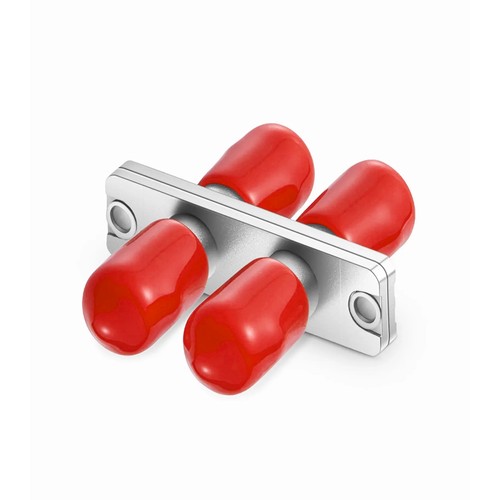
New Zealand engineering teams can use the documented values below to compare the product with the intended channel and as-built requirements. ST UPC Duplex OS2 Fiber Adapter with Flange couples two fiber connectors into one continuous optical optical route. Inside the housing, a zirconia ceramic sleeve holds the two ferrules on a common axis, keeping insertion loss low and consistent across hundreds of mating cycles. The flanged housing screws directly to the relevant panel cutout for a permanent, vibration-proof mounting.
Product Highlights
- Protective Dust Cover Keeps the Inside of The Adapter Clean From Dust
- Threaded Adapter for Easy Installation and Removal
- ≤0.2dB (Typical) Low Insertion Loss
- ST Guarantees for Long-term Stable Mechanical Properties and Repeated Matching
- Zirconia Ceramic Sleeve with High Precision Alignment
Specifications
| Body Style | Duplex |
|---|---|
| Polish Type | UPC |
| Fiber Mode | OS2 |
| Insertion Loss | ≤0.2dB |
| Durability | 1000 times |
| Mounting Type | Full flanged |
| RoHS Compliancy Status | Compliant |
| Operating Temperature | -40 to 85℃(-40 to 185℉) |
| Storage Temperature | -10 to 60℃(14 to 140℉) |
Why the alignment sleeve decides adapter quality
Each optical adapter is, at heart, a sleeve alignment problem: two connector ferrules must meet on one axis with their end faces touching, and any eccentricity shows up directly as insertion loss. Zirconia ceramic is the standard sleeve material given that it machines to sub-micron tolerance, resists wear across repeated matings and holds its dimensions through temperature swings. The adapters in this range use zirconia sleeves rated for insertion loss of 0.2 dB or better, which keeps an adapter pair well inside any loss-budget calculation.
Bulk packs and the economics of sparing
Panel work consumes adapters in dozens, not singles: a frame reload takes a full pack, and the spares kit must hold more against breakage, contamination and the relevant adapter that vanishes during a hurried re-entry. The ten-piece pack format matches that reality - one pack per panel mounting point covers the load-out with spares, and the unit cost drops well below single-piece pricing. Bulk packs additionally guarantee that each adapter on the relevant panel is the matching revision, the matching color and the matching sleeve quality.
Kit planning for panel installation
A disciplined panel deployment kit counts everything before the van leaves: adapters at one pack per panel plus a spare, caps for each unused port, the screws or clips the relevant panel needs, and the cleaning supplies that keep end faces serviceable. Adapters are the cheapest line on that list and the one whose absence stops the job outright. The bulk pack format makes the counting simple - two packs per mounting point and the mounting point is covered, fitted and spared.
Flanged and flangeless mounting compared
A flanged adapter fastens to the relevant panel with two screws through the mounting ears: the joint is rigid, resists vibration and stays put for years, which suits frames and enclosures that move or ship. A flangeless adapter snaps into the cutout on spring latches: item is faster, density is higher, and a failed adapter swaps out in seconds without tools. Most panel families accept one style or the other; therefore, the alternative follows the relevant panel hardware already in the plant.
What adapter testing actually measures
Because an adapter contributes no signal of its own, its test is a mating test: reference connectors mate through the relevant adapter, and the inserted loss is recorded. A zirconia-sleeve adapter ought to add no more than 0.2 dB, and the mating must repeat that figure across cycles. Durability testing runs the mating hundreds of times and re-measures - a sleeve that wears loose announces itself as creeping loss. These figures, not the housing color, are what separates an adapter that serves for years from one that becomes the mystery fault.
Selecting the right adapter for the panel
Five decisions define the relevant adapter order: the relevant connector pairing must be compatible with the two sides of the mating, the mounting style must fit the relevant panel cutout, the polish color code must be compatible with the plant, the sleeve material must suit the behavior grade, and the count must cover the load-out plus spares. Getting all five right at order time is what turns a bag of couplers into a dependable panel. Where the pairing crosses connector families, the hybrid range covers the common conversions.
Optical Testing and Quality Checks
Each adapter is inspected before packing: the sleeve bore is checked for alignment and surface finish, the housing latches are cycled for positive engagement, and sample matings from every production lot are measured for insertion loss. Accessories are checked for fit against the adapters they serve.
How to Specify and Order
Refer to this adapter by connector pairing, mounting style, polish grade and pack quantity when requisitioning a quotation. For configurations outside the listed options - mixed packs, panel hardware kits or project packing - send the requirement with the enquiry and the factory will cross-check the manufacturable specification. New Zealand project orders can include documentation and labeling requirements alongside the technical configuration.
